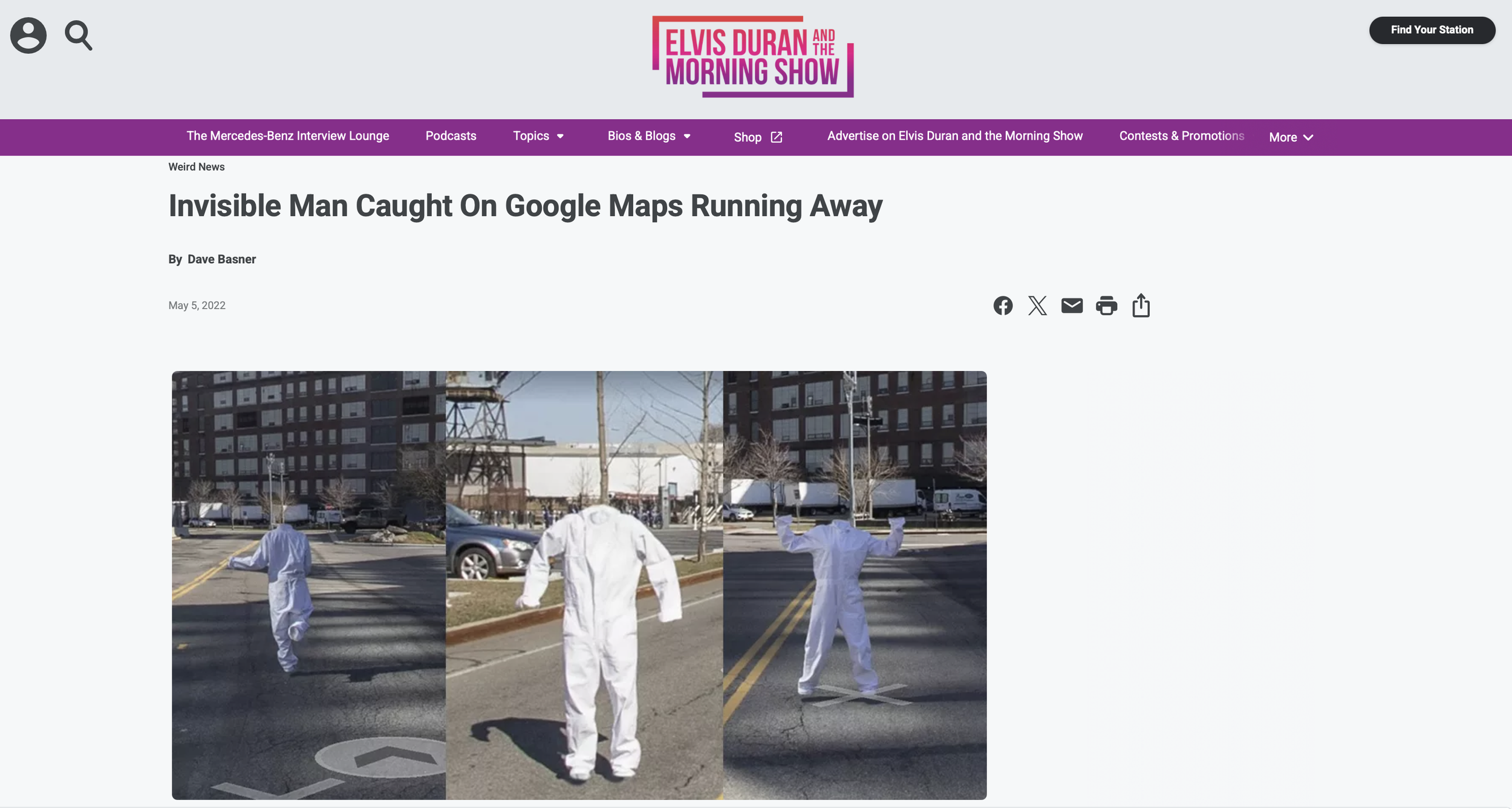
THE BALLAD OF A LABORER, 2019-2022
An expanded cinema and land art project on Google Street View
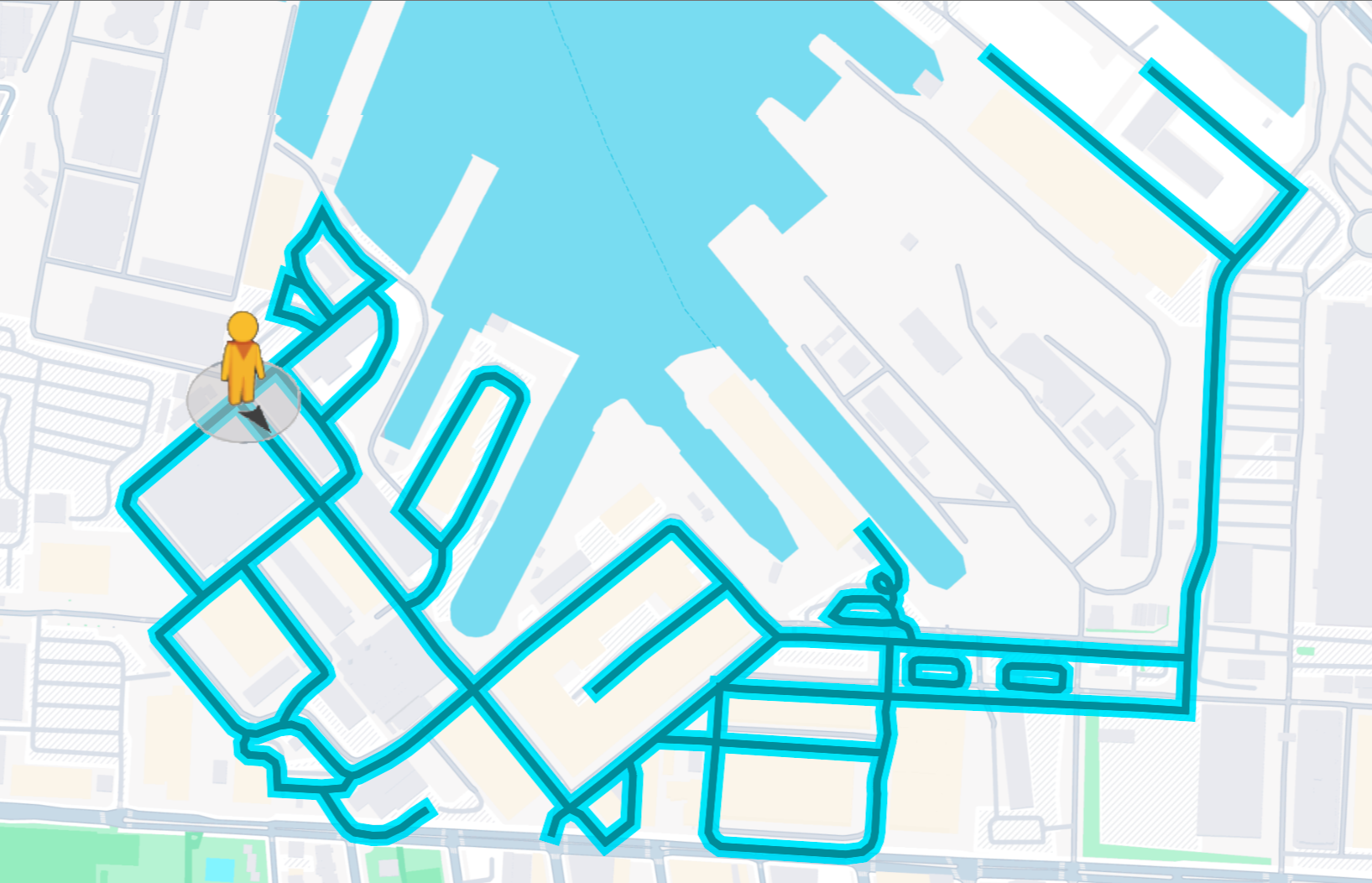
Produced over three years, 600 panoramic images map the previously unseen digital landscape of the Brooklyn Navy Yard, unfolding into an open-ended story of a print laborer lost inside Street View, searching for a way out.
Published anonymously, the project garnered ten of millions of views, and virally spread across the web.
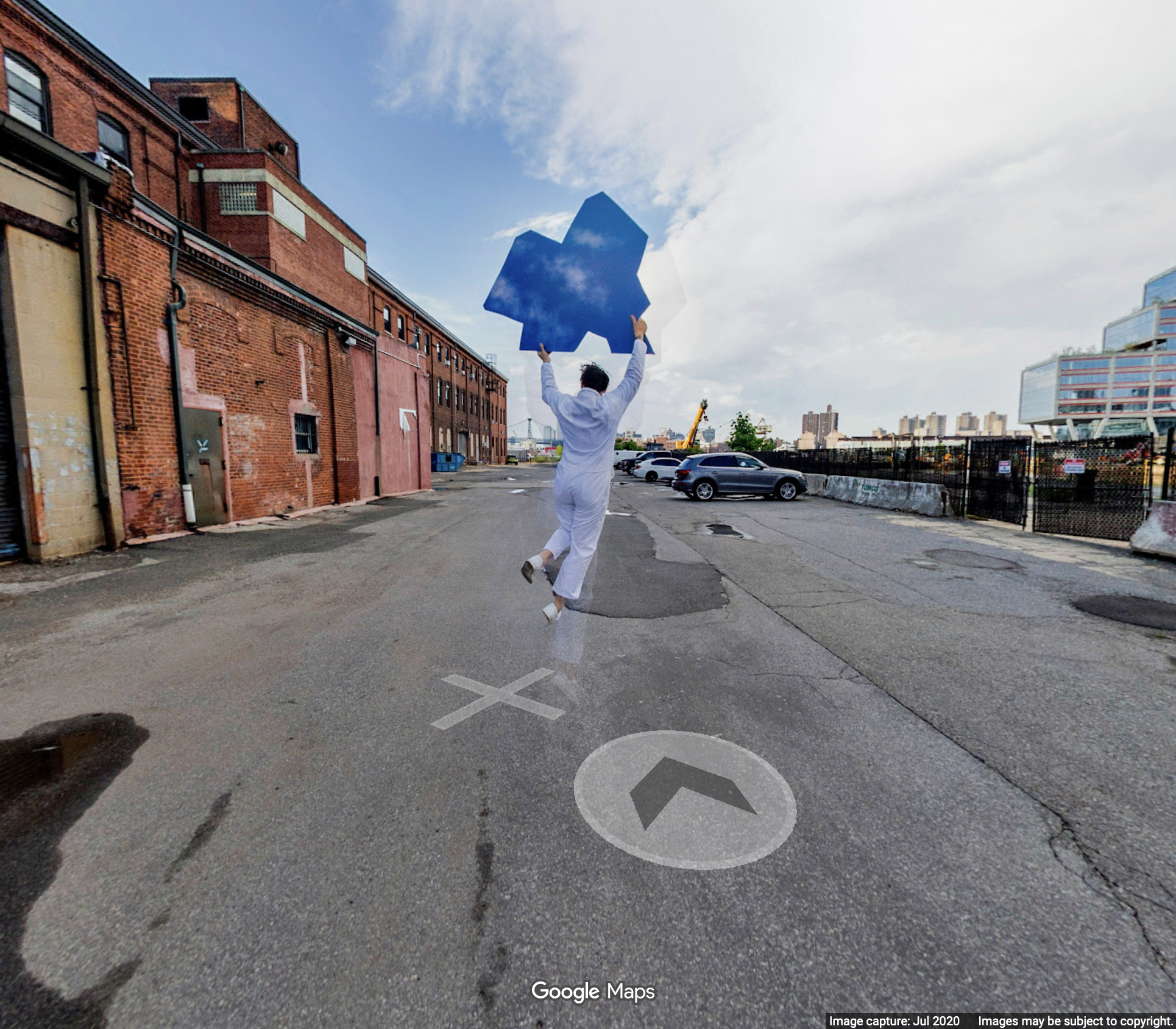
A private-public space and set-like design, the Navy Yard offered a unique opportunity to explore cartography and cinema through the stop-motion nature of Street View.
Carefully adhering to the guidelines of Street View, the project employs a Dogma 95 approach to a film making in virtual space.
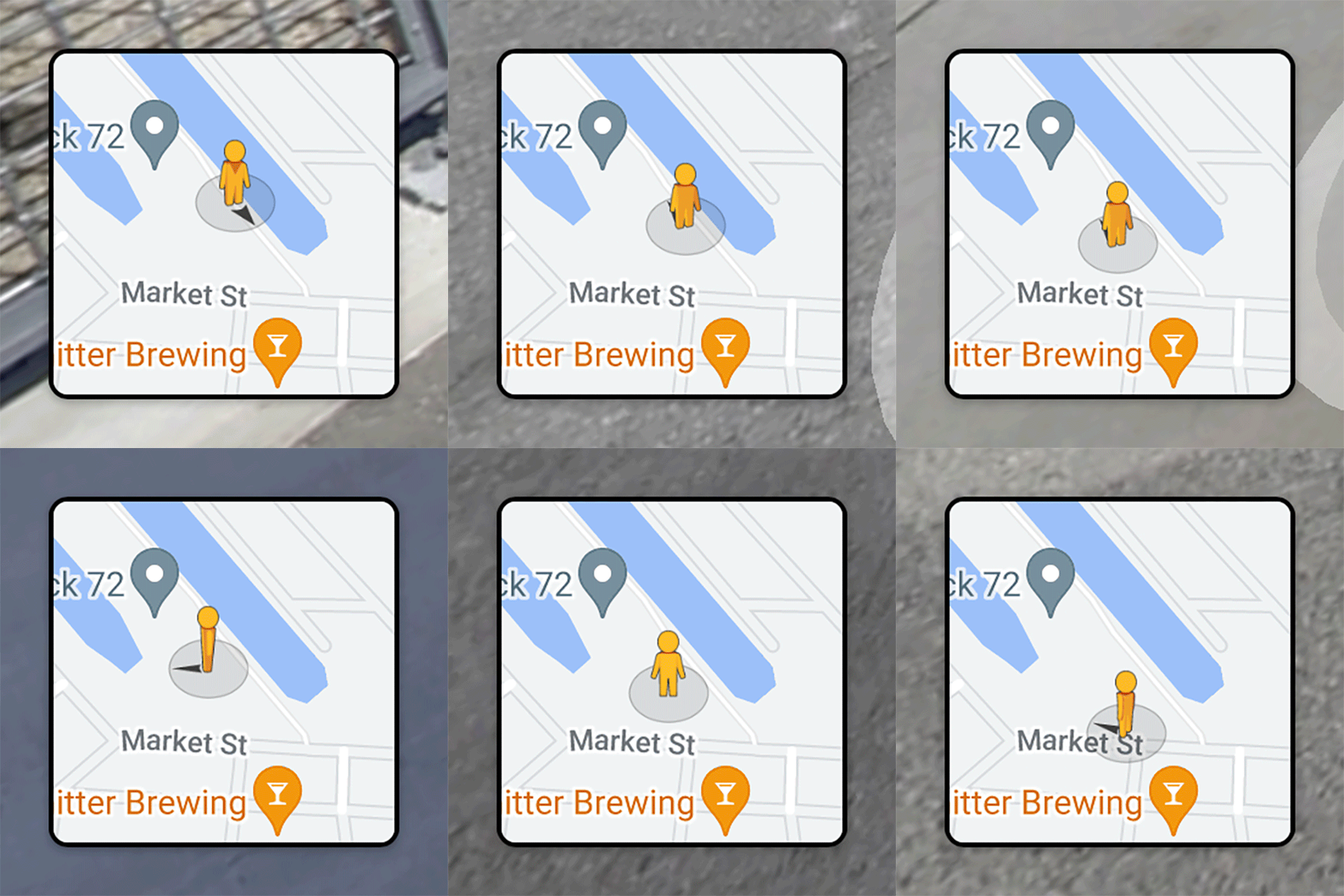
In order to create a “blue line” trajectory on Google Maps one must publish 25 consecutive panoramic images similar to a film frame rate.
The project is inspired by the work of Jacques Tati, Buster Keaton, and Charlie Chaplin.

It is a performance, a comedy, a drawing, and internet mythology reinventing how story telling through cartography.
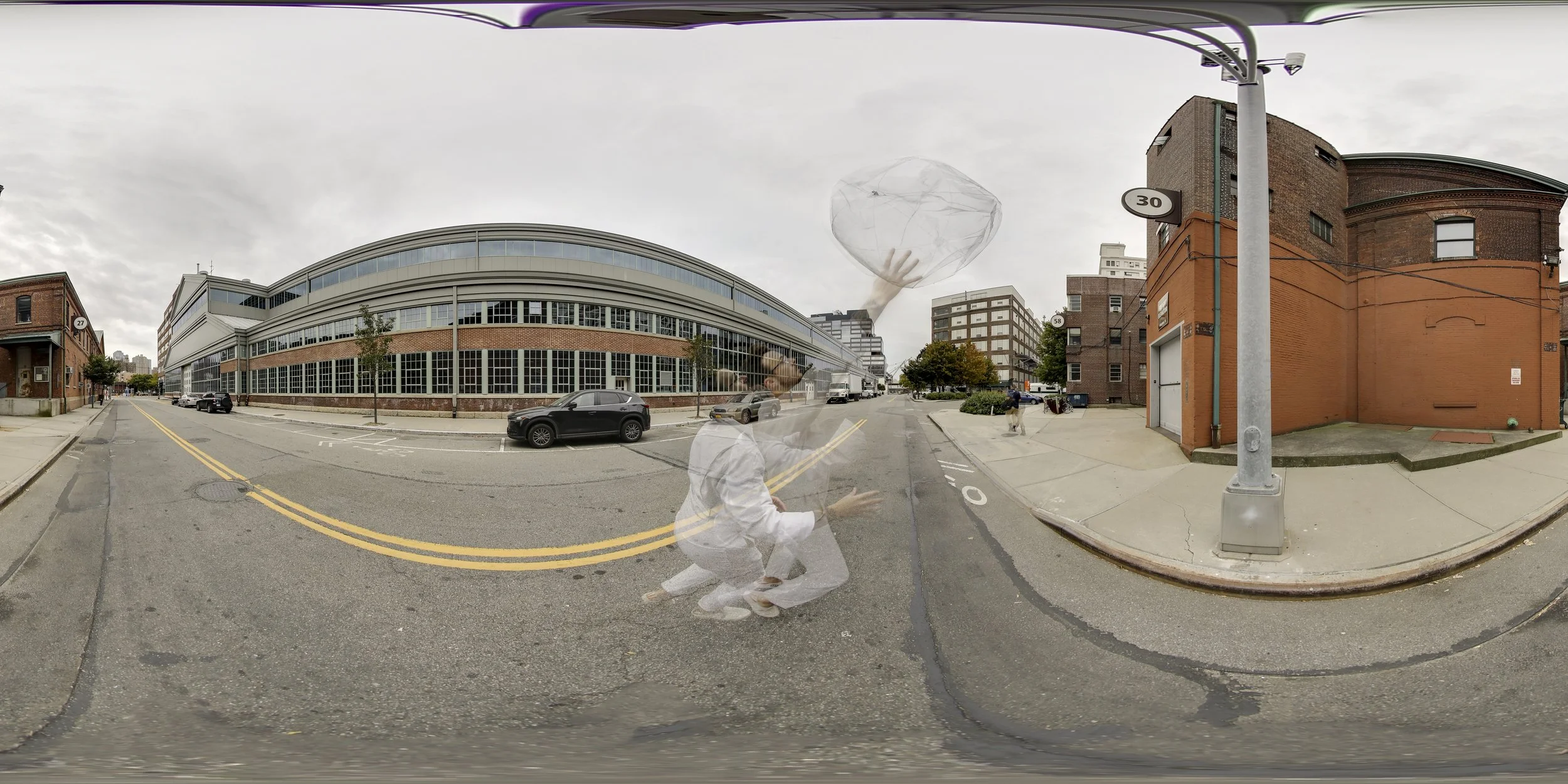
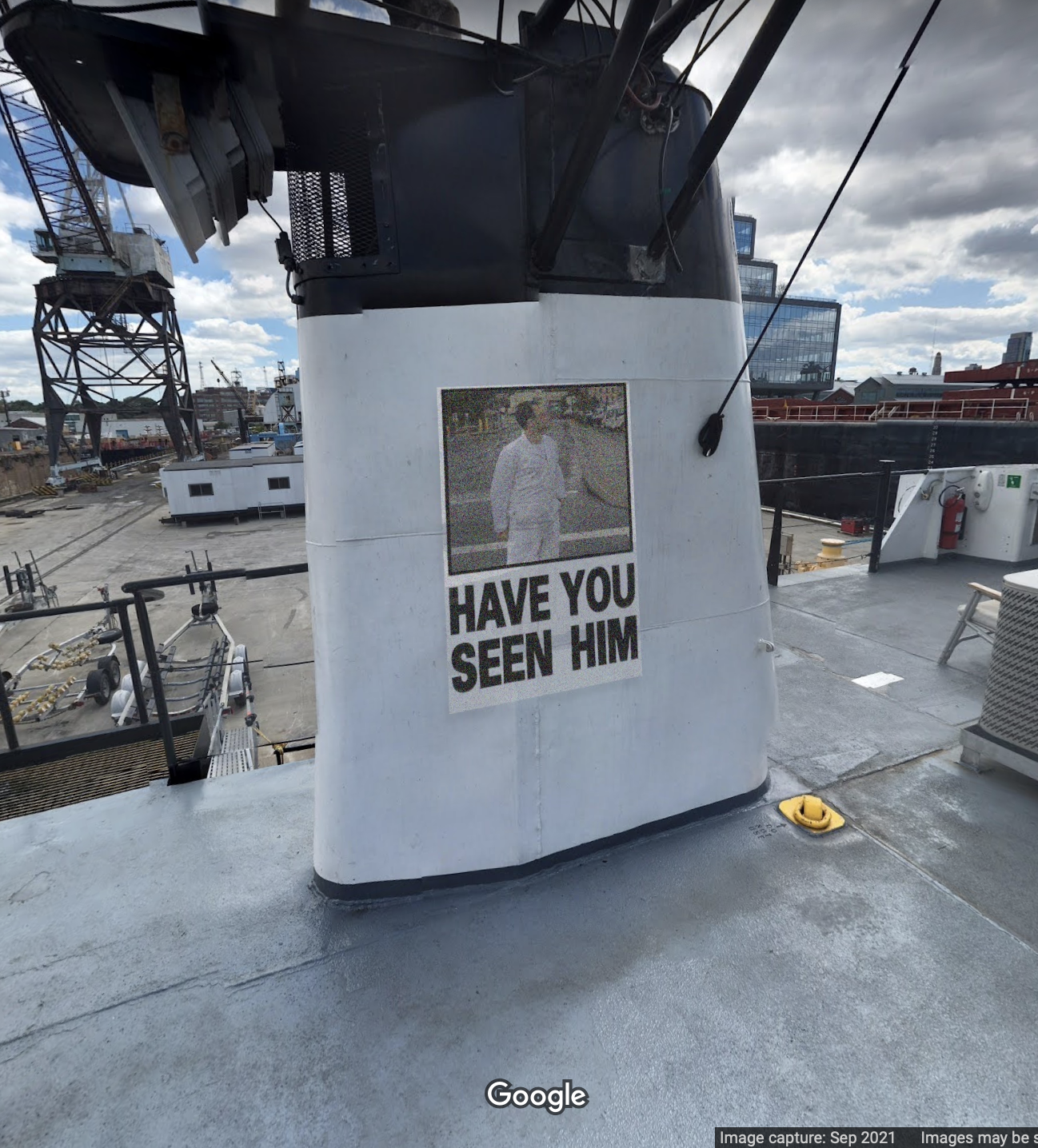
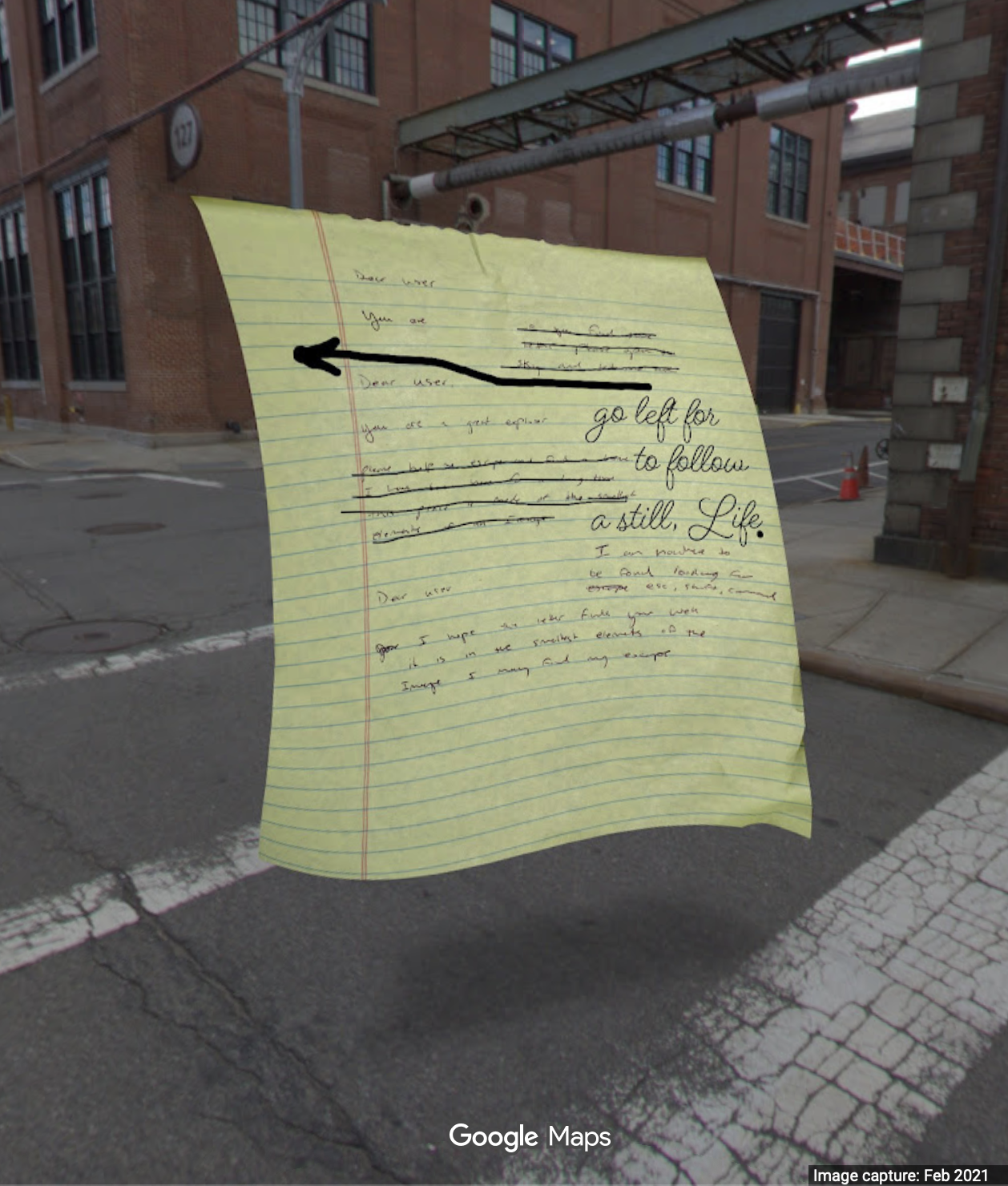
Along the way, Isolini often left breadcrumbs and easter eggs for users.

Isolini’s E-Scooter Tour gained viral attention after being discovered by users on September 16, 2021. The Reddit thread discussing the work drew hundreds of thousands of views and over 500 comments, leading to coverage in tabloids and mainstream news.
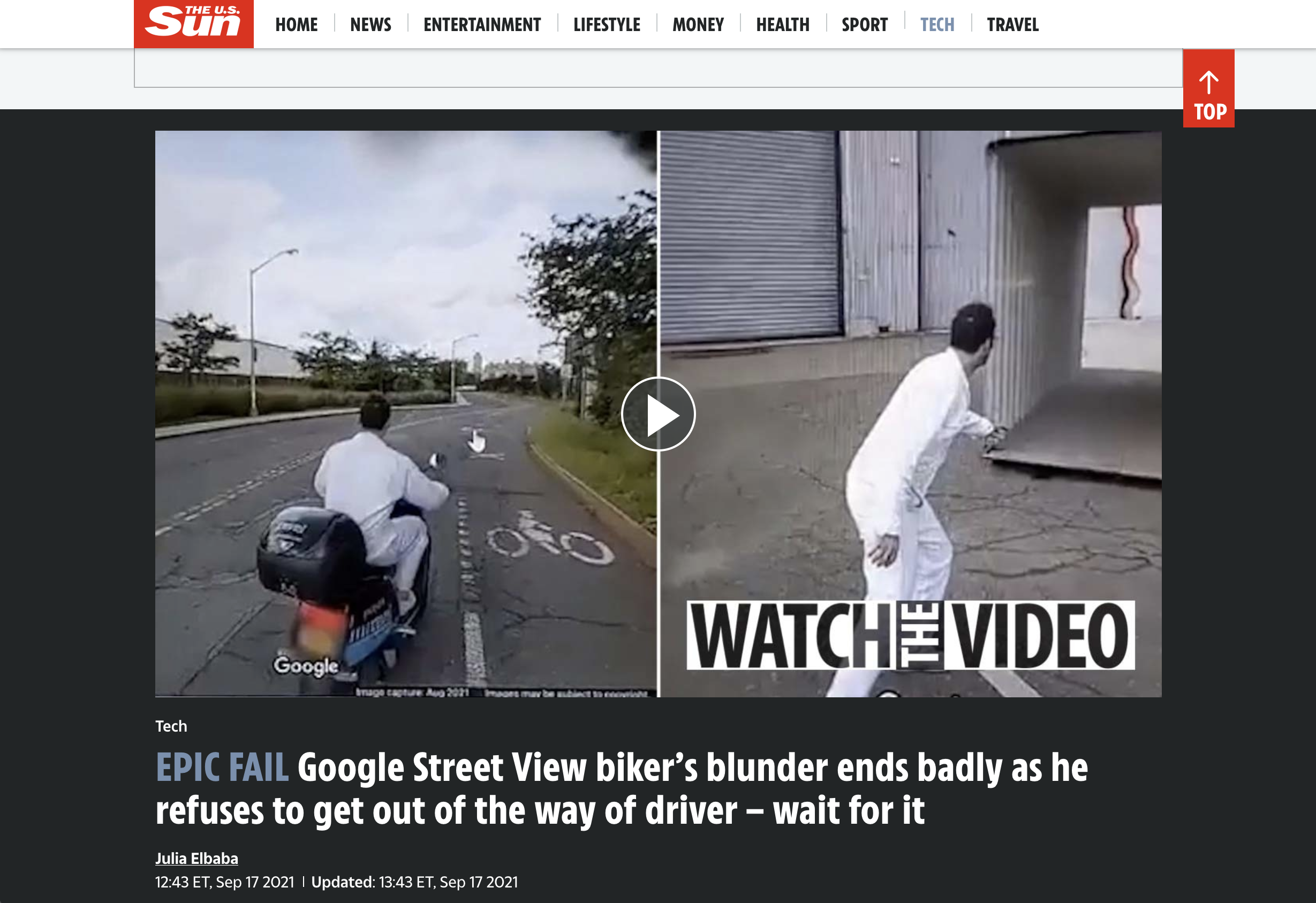
Link to The Sun article here
The Ballad of a Laborer was featured in the seminal essay “Data is the New Gold” by Pita Arreola, part of the V&A Museum’s publication Digital Art - 1960’s to Now.
It was first written about anonymously in Moving Image Artist Journal U.K. here.
November 19th 2022 marked the official debut of this work with Microscope Gallery— Please visit Platform for the interactive representation of this work.
A recorded browser-performance of the project was part of Screenwalks courtesy of Fotomuseum Winterthur and The Photographers Gallery U.K
Parts of this work are still live on Google Maps, however, many links are broken— You might have a chance to experience the work by starting here.
Jason is considered a top photographer on Google Maps.
Among a wave of articles, videos surfaced that reinterpreted the work, attaching new meanings and contexts. As coverage grew, the project evolved into a broader social commentary.